Meeting with the business community on the construction industry: key issues and agreements
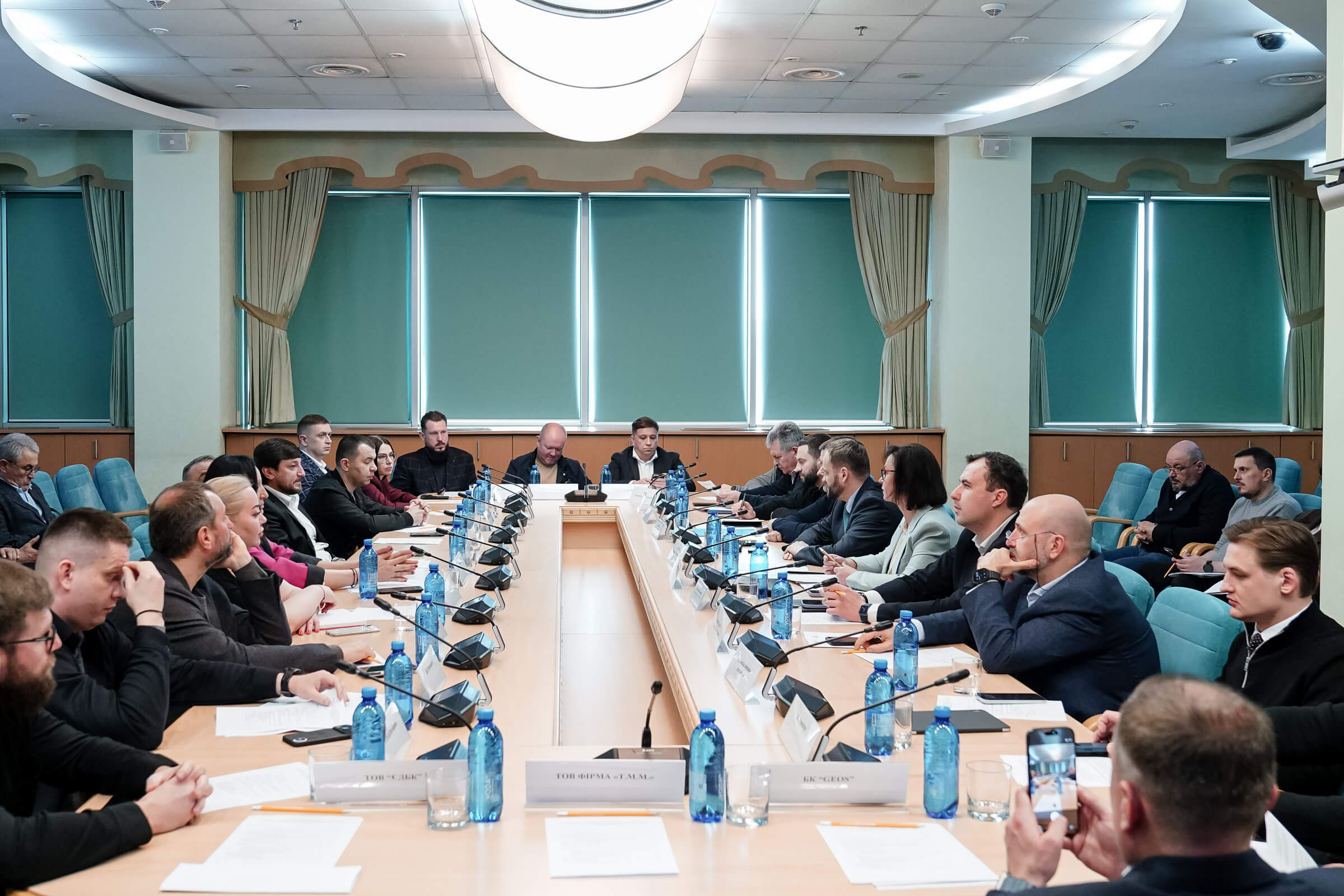
The construction industry is one of the country’s key sectors. It was with this in mind that Deputy Prime Minister for Recovery Oleksiy Kuleba held a meeting with business representatives and industry associations, attended by the Ukrainian Association of Developers and executives from leading development companies.

More than 35 real estate development and construction companies, as well as industry groups and associations from various regions of Ukraine, joined the dialogue.
The conversation lasted nearly three hours and was as substantive as possible. We agreed to hold such meetings regularly—once a month—with a focus on concrete decisions and results.

Preparing for the heating season
One of the key issues was preparation for the upcoming heating season. Following the meeting, a working group will be established to propose solutions for high-rise buildings based on developers’ practical experience and to implement them before the start of the new heating season.

Funding and Permitting System
The lack of stable rules in the permitting system effectively hinders the development of mortgages and bank lending. Today, any document in the permitting system can be revoked by law enforcement agencies, a court, or the issuing authority. This poses significant risks to investors and banks.
In European practice, a different approach is followed—the principle of finality: once the statutory time limit has expired, permits that have been issued cannot be revoked or overturned in court. It is precisely the guarantee that the facility for which the investment is intended will be built that forms the basis for bank, project, and mortgage financing. Without this, Ukraine’s large-scale reconstruction will be extremely difficult.
Urban planning documentation
Due to inconsistencies between the master plan and detailed zoning plans, even approved decisions can be overturned in court. One tool for addressing this issue is regular urban planning monitoring, which should be conducted annually and will make it possible to document the actual status of land use.
Digitalization and New Approaches
On April 1, the mandatory digital system for commissioning facilities—the "Transparent Construction" app—went live. The use of artificial intelligence to review project documentation was discussed separately—as a tool that can significantly reduce approval times and minimize human error.
Pressure on developers
Separately, participants raised the issue of pressure on developers from law enforcement agencies. One of the reasons is the lack of a clear interpretation of regulations, particularly regarding developers’ financial contributions to infrastructure development. This is a systemic problem for the entire industry.
A recent high-profile court case, in which the prosecutor’s office sought to freeze the accounts of a construction project’s client, clearly demonstrated the scale of the risk: had the court ruled otherwise, it would have meant halting construction on apartments that had already been sold. Following the meeting, it was agreed to involve representatives of the Office of the Prosecutor General and to systematically address these issues.
The Ukrainian Association of Developers continues to advocate for the industry's interests and will share updates on these matters.


