How a City’s Identity Becomes a Tool for Strategic Development: Findings from LUN City 2026
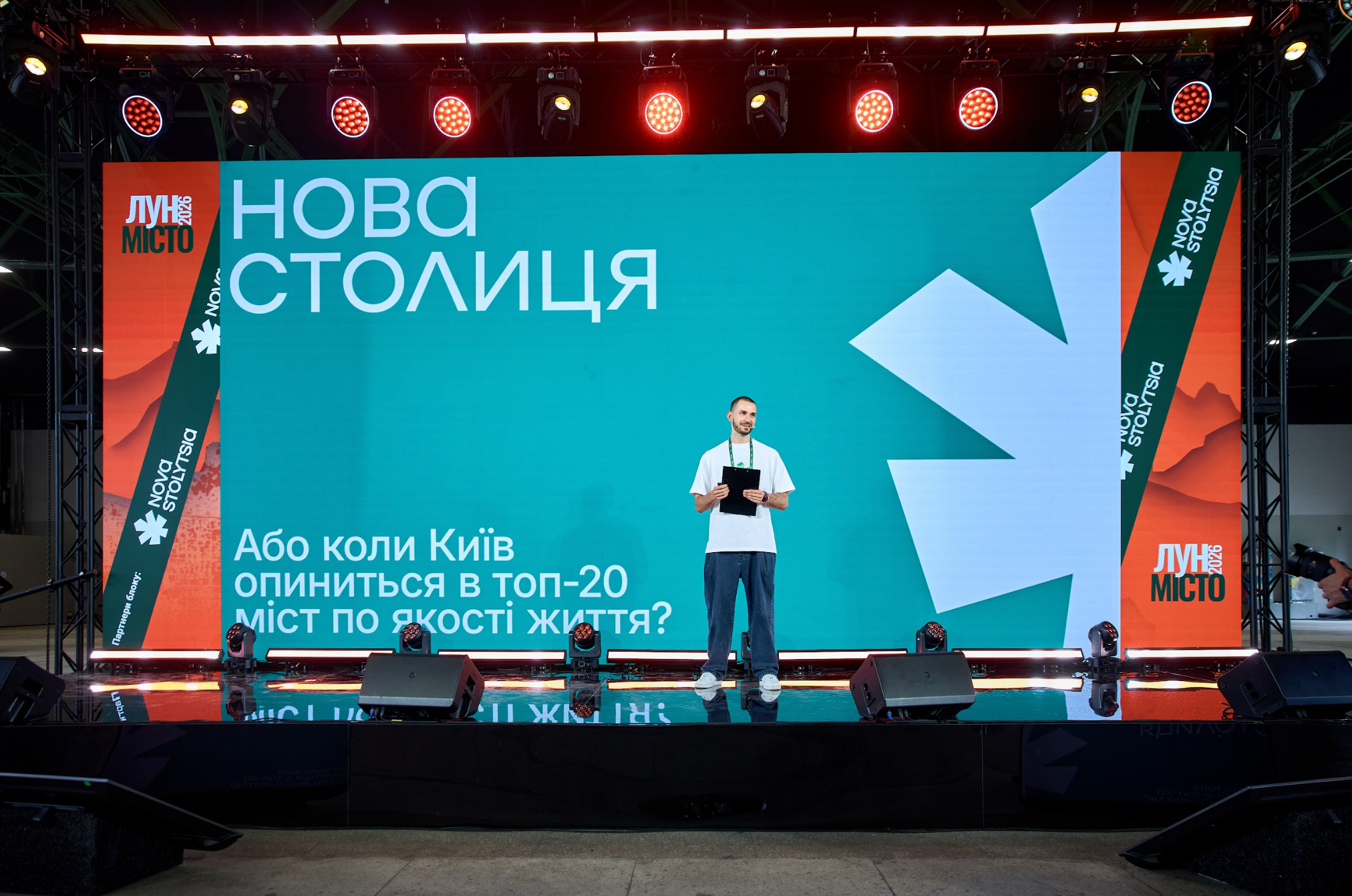
On June 9, Kyiv hosted the large-scale LUN City 2026 conference, which brought together over 700 participants, including representatives of the government and cities, developers, architects, urban planners, civic initiatives, expert organizations, and the media. The Ukrainian Association of Developers served as the event’s general partner.

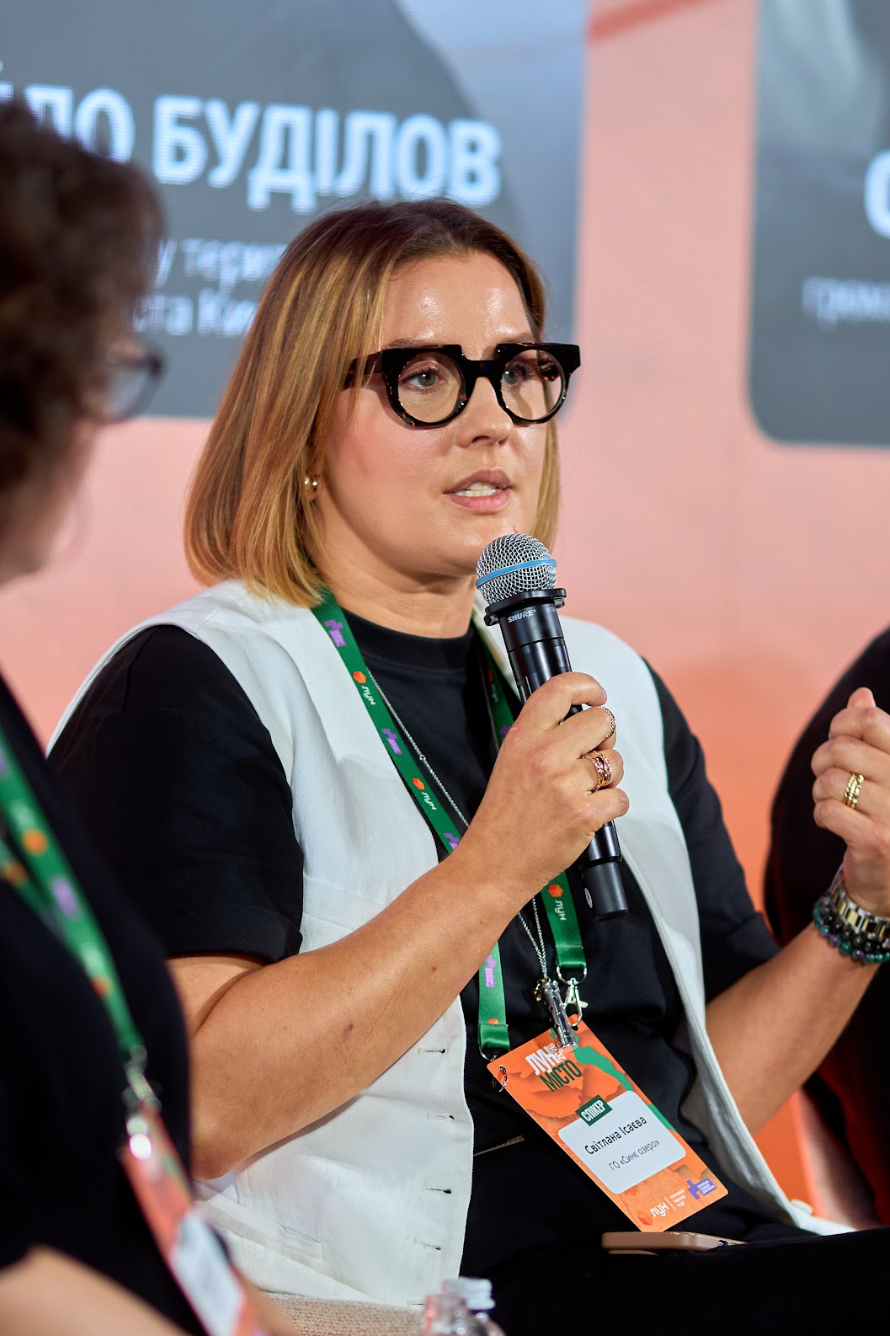
The panel discussion “The Future of the Capital: New Dimensions of Urban Development” was moderated by Tetyana Shulga, Managing Partner of RED by LUN. Speakers included Ivan Molchanov, co-founder of the capital’s strategic development platform, Victoria Titova, CEO of Big City Lab; Mykhailo Budilov, Director of the Kyiv Territorial Control Department; Serhii Bilov, Deputy Mayor of Zaporizhzhia; Lidiia Gontar, Head of Urban Vision Lutsk; and Svitlana Isaieva, representative of the “Blue Lake” civic initiative.
The main shift: from reaction to participation
At the start of the discussion, the speakers identified a key shift in the community’s needs over the years of full-scale war. Svitlana Isaieva described this as a transition from observation to participation:
“The main thing that has changed is the public’s sense of involvement and its role. It’s a shift from being an observer to being a participant. The public is actually demanding this, and we’re ready.”
Victoria Titova described this as the emergence of a demand for high-quality city management. According to her, the resilience of a city and its residents is reflected not only in its infrastructure but also in people’s desire to stay:
“During martial law, civil society organizations can only meet some of the needs. Someone has to proactively respond to constant changes—and that depends on how well the city is managed. The key characteristic of resilience is when we can maintain our quality of life and want to stay here. It’s not just about having no choice, but about wanting to,” she noted.

Mykhailo Budilov clarified that although Kyiv has lost part of its population over the years of the full-scale invasion, it has also taken in displaced persons—and the total number of requests from residents remains roughly the same. What has changed is the nature of these requests:
“People try to understand specific issues, identify the person responsible, and make their voices heard. They demand that their concerns not only be considered but also resolved—and they monitor how the issue is being addressed.”

Identity as a Foundation: The Experience of Zaporizhzhia
Serhiy Bilov explained that for Zaporizhzhia, a city located 15–20 kilometers from the front lines, safety remains the top priority. However, it is local identity that has become the foundation holding the city together.
“Local identity is what keeps the 750,000 residents of Zaporizhzhia in the city. It answers all the public’s questions: when there is a common framework for what Zaporizhzhia is, it becomes easier to explain the purpose of a particular project.”

“It is very important to view identity as a process. It should become part of our daily routine, not just a one-off project,” he emphasized.
The Lutsk Experience: Research as a Starting Point
Lydia Gontar explained that in Lutsk, the starting point was an urban study initiated by the business community:
“The platform brought businesses together, and they began to initiate urban studies. We conducted a study that the city later incorporated into its development strategy, and we demonstrated a slightly different approach to addressing urban issues.”
An important conclusion was that a single study is not enough:
“Along with the book, you also need to bring in education and community engagement. When the topic of urban planning becomes interesting not just to a handful of architects with degrees, when residents start asking why a crosswalk is located right here and why it’s designed that way—the municipality can no longer ignore the community’s demands, because the community is the one that elects that municipality.”
Kyiv: Between Reactivity and Strategy
Ivan Molchanov noted that city management currently seems to be driven more by a reactive rather than a strategic approach. That is why he initiated the creation of the “New Capital” platform.
“We want to shift from reactive to strategic thinking and learn to listen to one another: so that the city listens to Kyiv residents, developers listen to activists, and urban planners listen to architects,” he explained.
Mykhailo Budilov noted that Kyiv had been preparing a new master plan through 2040—public discussions on it were scheduled to begin on February 24, 2022.
“A full-scale invasion has begun. That master plan is no longer viable. What’s more, we can’t even predict what the next few years will bring,” he said.
Despite this, Budilov emphasized the importance of maintaining constant communication with the community through digital tools—specifically the app and the 1551 contact center.
Victoria Titova drew attention to a systemic problem:
“The key problem in Kyiv is that the community develops something and then presents it to city hall. This is fundamentally the wrong process. It worked in Zaporizhzhia because Serhiy, the deputy mayor, is part of this process and leads it. A document such as a strategy or master plan cannot be developed without the authorities leading this process and involving everyone else.”
Svitlana Isaieva added that legal changes are necessary for effective community participation:
“Although the community already possesses a high level of expertise, legally speaking, the community’s opinion is merely advisory. I believe the most important place to start is to legally enshrine the weight of the community’s opinion. There are examples of this in major cities around the world, where it is enshrined as a social contract at the national or at least municipal level.”
Pooling the Experience of Cities
In closing the discussion, Lydia Gontar emphasized that while the experiences of different cities cannot be replicated exactly, networking and mutual learning are extremely valuable.
“We need to empower those who are capable and strengthen those who are strong. We shouldn’t reinvent the wheel. There are communities and institutions that can do this effectively—and we don’t need to do it for them.”
She thanked the Kharkiv-based platform Urban Reform, which visited Lutsk in 2023 and helped lay the groundwork for Urban Vision’s work.
Ivan Molchanov confirmed that the "New Capital" platform was created specifically to bring together people with diverse backgrounds.
“A strategy cannot be developed in a vacuum. Everyone must be involved—not just to create it, but to bring it to life. Nothing drives you like a shared vision, especially one you’ve created yourselves. That’s what motivates us to stay in Ukraine, to return to Ukraine, and to transform our cities.”