The war and new expectations are changing the role of developers in the Ukrainian market. Summary of the discussion at the Construction Congress
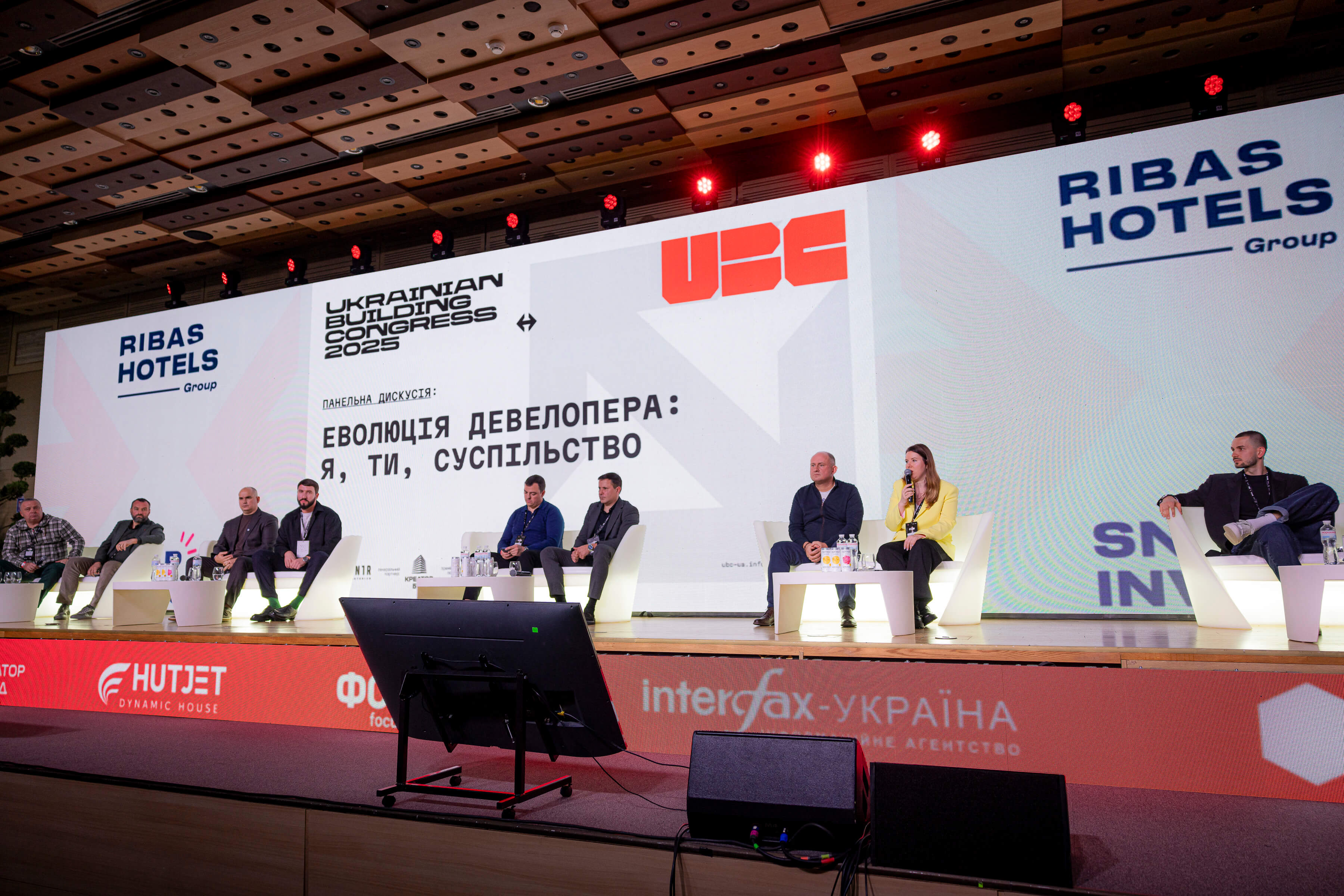
The Construction Congress hosted a panel discussion titled "Me, You, Society" where key developers, members of the Ukrainian Association of Developers, discussed how the role of market players has changed, what new standards are shaping modern society, and what development will look like in the coming years.
The moderator of the discussion, Vitaliy Melnyk, emphasized that today's developer is no longer about building square meters, but rather about influencing the quality of the urban environment, community safety, and culture of life.
The discussion had three key vectors: the evolution of the developer's personality, responsibility and partnership, and the growing expectations of society, and we will describe each of them in detail.
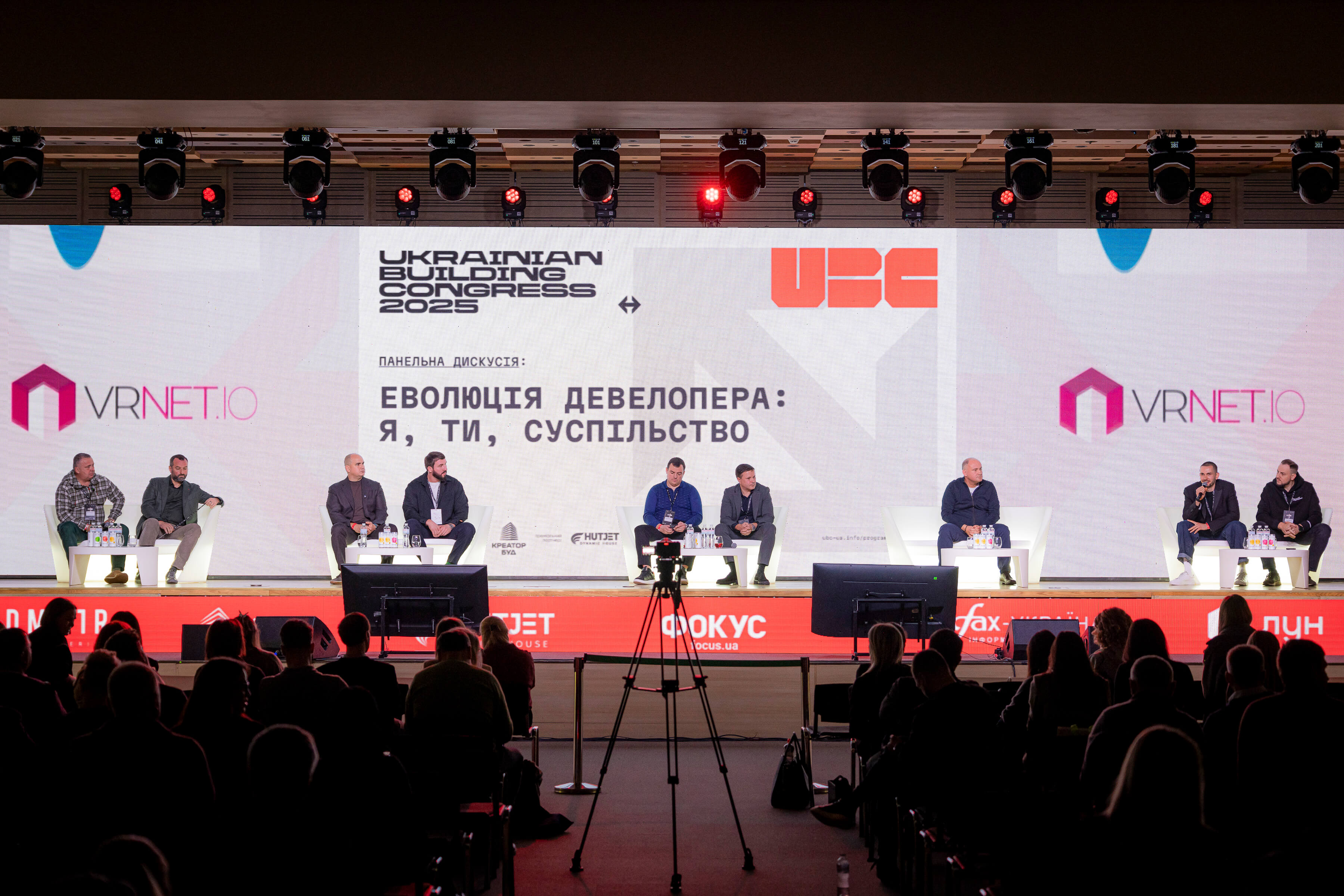
A new generation developer
All speakers agreed that the Ukrainian real estate market has undergone a fundamental transformation over the past 10-15 years. The developer is becoming the architect of the future city - in a much broader sense than before.
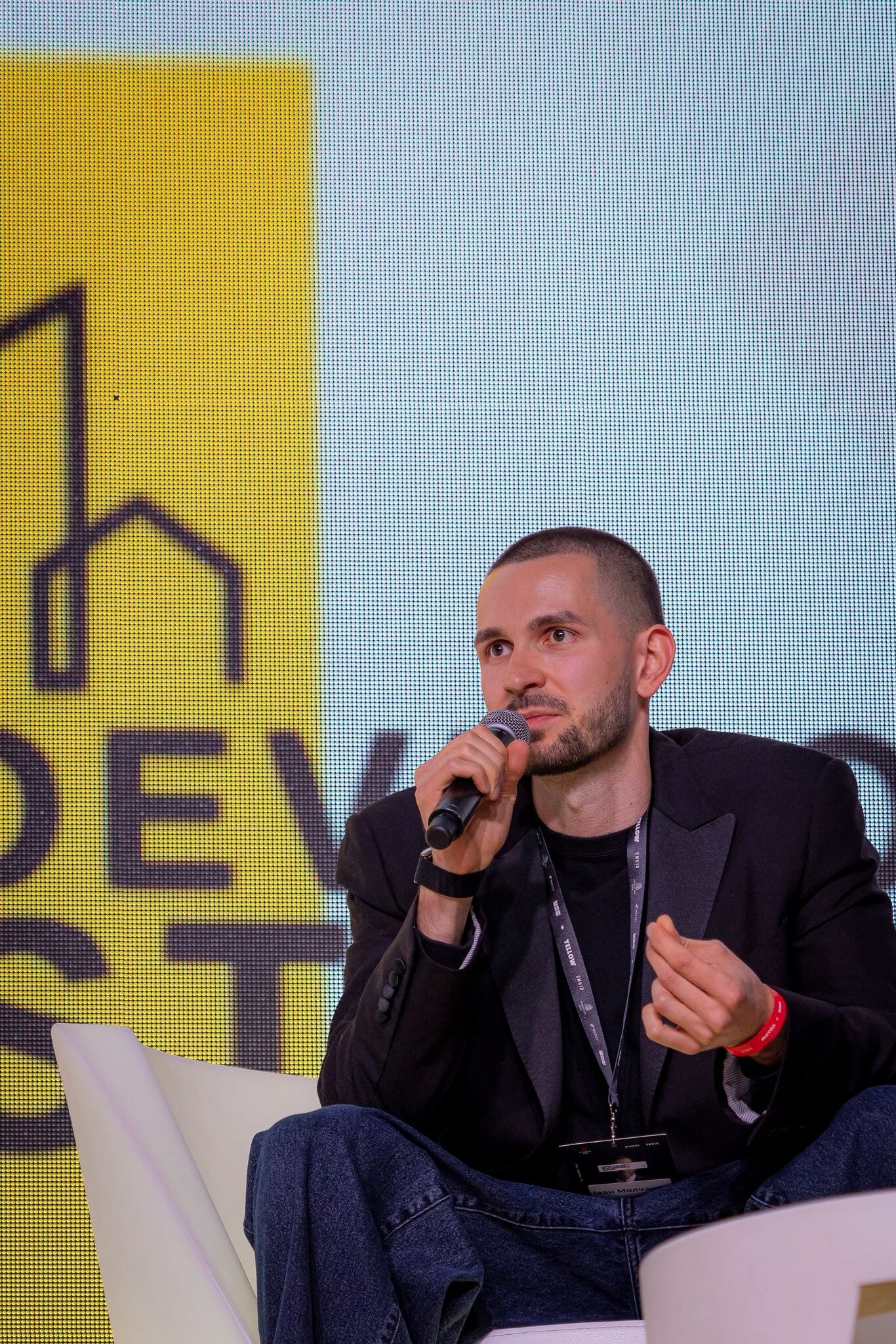
Ivan Molchanov emphasized the transition from the era of builders to the era of developers:
"The era of builders is over and now the era of developers is coming. The developer now has a very big influence on the formation of the city. They are becoming a leader of change, a moderator of the city and a bridge between the community, business and government. And now is not the time for square meters, but for the meanings we put into what we build.
Values are shifting towards human-centeredness. Everything is done for people and around people. The entire ecosystem is being built so that people can exist and grow in these built objects. Now is a very cool time, because all developers have started to think strategically and look 20-30 years ahead."
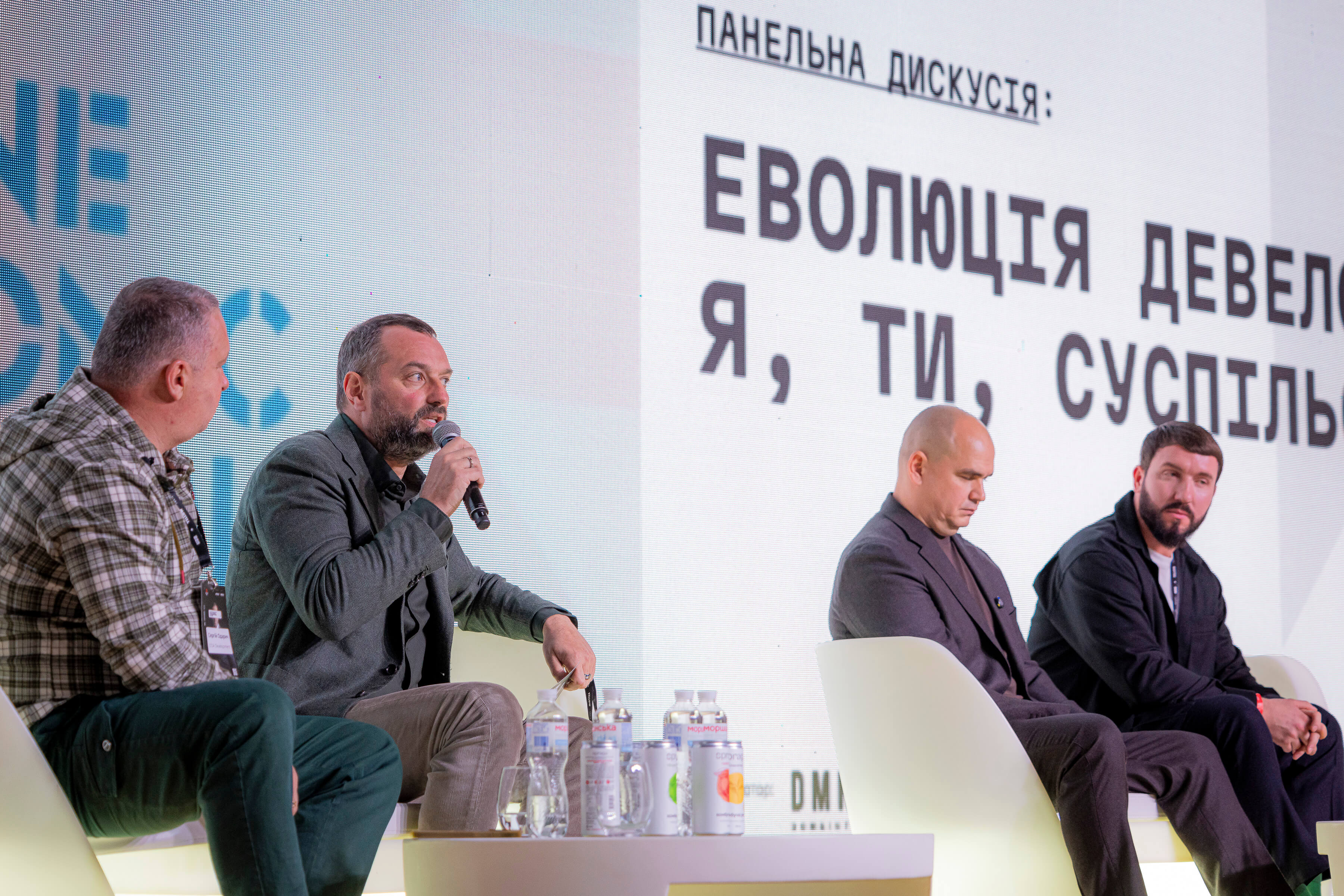
Andriy Vavrysh spoke about the role of the developer as a risk bearer and a driver of quality solutions, not just a creator of buildings:
"The developer is the one who accumulates the main risk of decision-making. We take responsibility and all the risks. It's about project implementation, choosing an architect, approving projects and concepts, building financial models, selecting contractors, managing deadlines, and choosing the technology for the facility. A developer is not an architect. He is a person who accumulates the maximum risk and builds a system [...].
A developer is a person who takes responsibility, not for what people already buy or use, but for what will be designed. After all, only in two years the realization will begin. In five years, the market will get a construction project. And in seven years, the city will finally assess whether the project was successful or not."
According to him, today's Ukrainian developers have a unique experience of working in conditions of systemic instability, and this will become their competitive advantage in the future.
Anna Laevska added that both development and the approach to creating residential complexes have changed:
"The biggest changes have occurred in the context of the architecture of the environment and the approach to landscaping. If we look back to 2010-2013, then it was possible to build 10-storey boxes with fairly simple facades. Minimal landscaping, minimal equipment. And it was okay. But today, consumer tastes have changed. There is already a lot of attention to the quality of facades, to architecture, to the aesthetics of the public lobby, and to landscaping. Indeed, many companies have moved towards European construction standards and the European quality of complexes. Therefore, given how consumer tastes have changed, both the developer and the attitude towards the product have undergone a significant transformation. Now it is important not only what is created inside the complex, but also what is created around it [...]. The developer becomes responsible and develops not just some individual projects, but the urban environment as a whole. The approach to the developer's social responsibility and attitude towards the city has changed significantly."
Anna also noted that in recent years, developers have become more active in developing new bills, initiatives, and changes that affect the entire construction industry and that define both construction standards and market rules. The Ukrainian Association of Developers is working fruitfully in this direction.
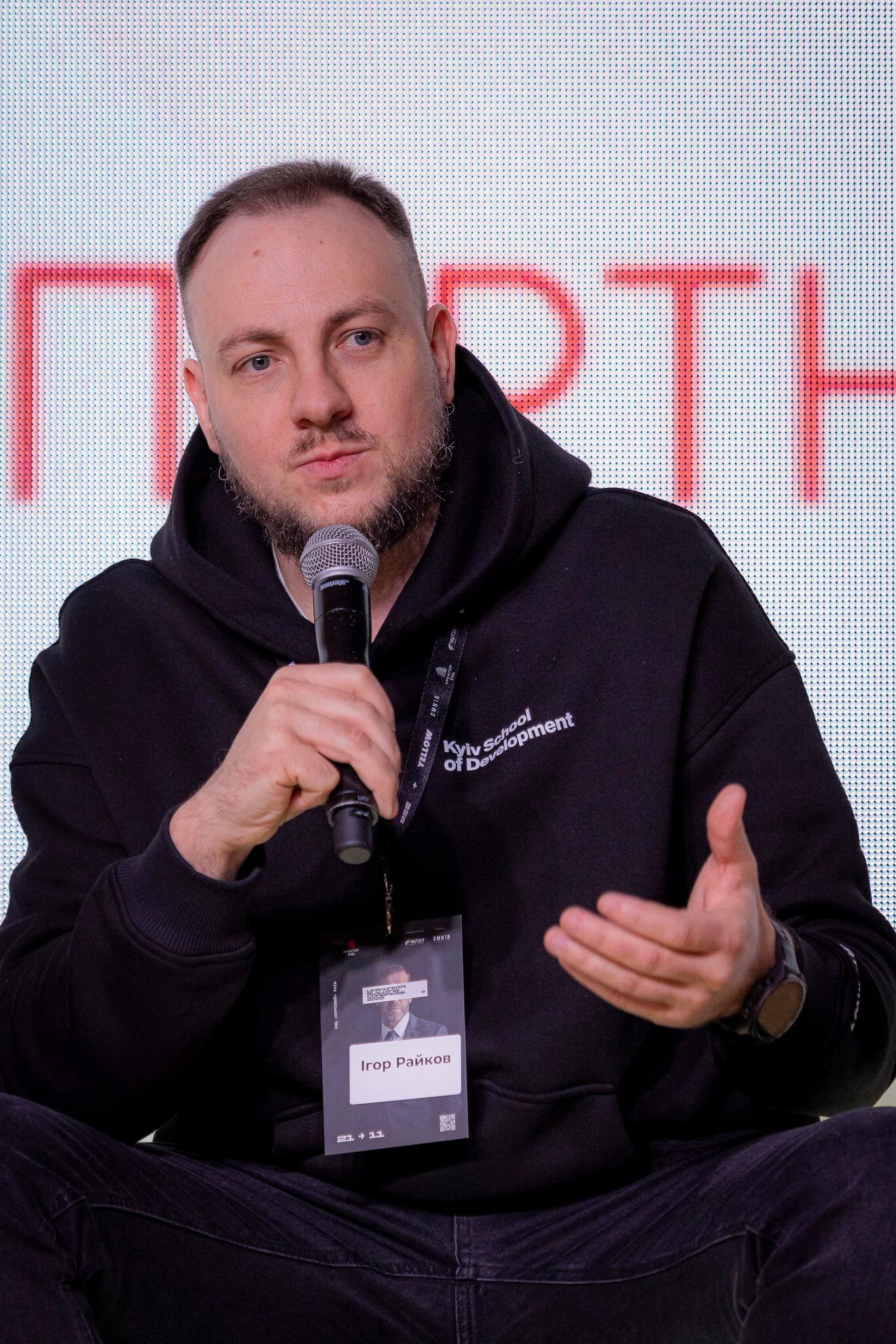
Ihor Raikov said that Ukrainian development projects can already compete in quality with the best European models, and that Ukraine has a greater potential to make more interesting projects:
"Changes in our development took place in 2015-16, when there was a generational change of outlook, borders were opened and developers brought here a view of what a modern comfortable human-centered city should look like. They have changed the buyer and he has become even more demanding, thus pushing us to even better and more qualitative changes.
Very often our construction projects are compared to European ones. In some respects, of course, we have room to grow. But in Kyiv and Lviv, the bar is very high and the level of projects is high. We can already compete with the way the best European places are organized. And most importantly, the kind of development that can be done here is impossible to do in Europe. Everything there is developed in very small clusters. As a Ukrainian developer, today you can carry out a social mission, your neighborhood used to look like an industrial zone or some post-Soviet territory, and you can improve it and leave a mark."
Serhiy Odarich agreed with this opinion, saying that indeed, many Ukrainian projects are cutting-edge:
"This year I have been to three countries: The Netherlands, Germany, and Denmark. And in comparison, our projects are not lagging behind. Europeans are very surprised when they see anti-aircraft guns working on our roofs at night, and in the morning we go to our construction site."
Responsibility and partnership as a market standard
According to experts, development in Ukraine has ceased to be a "build and sell" story. Today it is a strategic interaction with the city, society, contractors, investors, banks and residents.
Anna Laevska emphasized the importance of honesty and clear rules in all interactions:
"Partnership, cooperation, and information sharing create more opportunities than fighting. Therefore, it is important to adhere to the win-win principle, which will bring positive results for all parties. And it is imperative to be attentive to the format of the established interaction. It should have clear rules of the game, clear rules of communication."
Andriy Vavrysh emphasized that the developer's responsibility begins long before construction and continues long after it:
"If the idea used to be: "I built it, sold it, and then it's not mine". And this is not a joke!" Today I understand that there has been a shift within the system and the developer is responsible not only for what he has built and how he has sold it, but also for the way the community lives. And this community management, I think, is our new challenge that we have to work on. It requires taking into account the efficiency of the economic functioning of the facility, the quality of services provided, the quality of the environment and 1000 life scenarios for the people who live there."
This evolution was made possible by market changes and the maturity of the teams working on the projects.
Public demand: security, energy independence and infrastructure
After the outbreak of a full-scale war, the expectations of investors and residents have changed radically. According to the panelists, the safety and sustainability of facilities are at the top of the list.
For example, Ivan Molchanov outlined the following three key criteria for modern demand:
"The first is security. The presence of a bomb shelter, energy independence. The second is infrastructure. How does this residential complex match my lifestyle? Can I take my child to school, go to the gym, is there everything I need? And the third is the presence of a community. After all, a person needs a person. Nowadays, this is a crucial factor that we observe at all our facilities."
Anna Laevska detailed the requirements for new projects:
"As for safety requirements, it concerns not only the availability of shelters but also the construction technology. Next, the service infrastructure. The availability of places for leisure, services, schools, kindergartens, parking lots are mandatory. Previously, people used to save a lot of money on this, but now it is a critically important area. Greenery and fresh air should be on the territory of the complex or nearby. In addition, there should be normal, repaired transportation routes, street lighting, and engineering infrastructure. Developers are now investing a lot of money in landscaping communal areas, repairing park areas, repairing sewers, roads, and street lighting networks. After all, residents choose a residential complex based on the general well-being of a particular location. And what's outside is no less important than the features that are created inside."
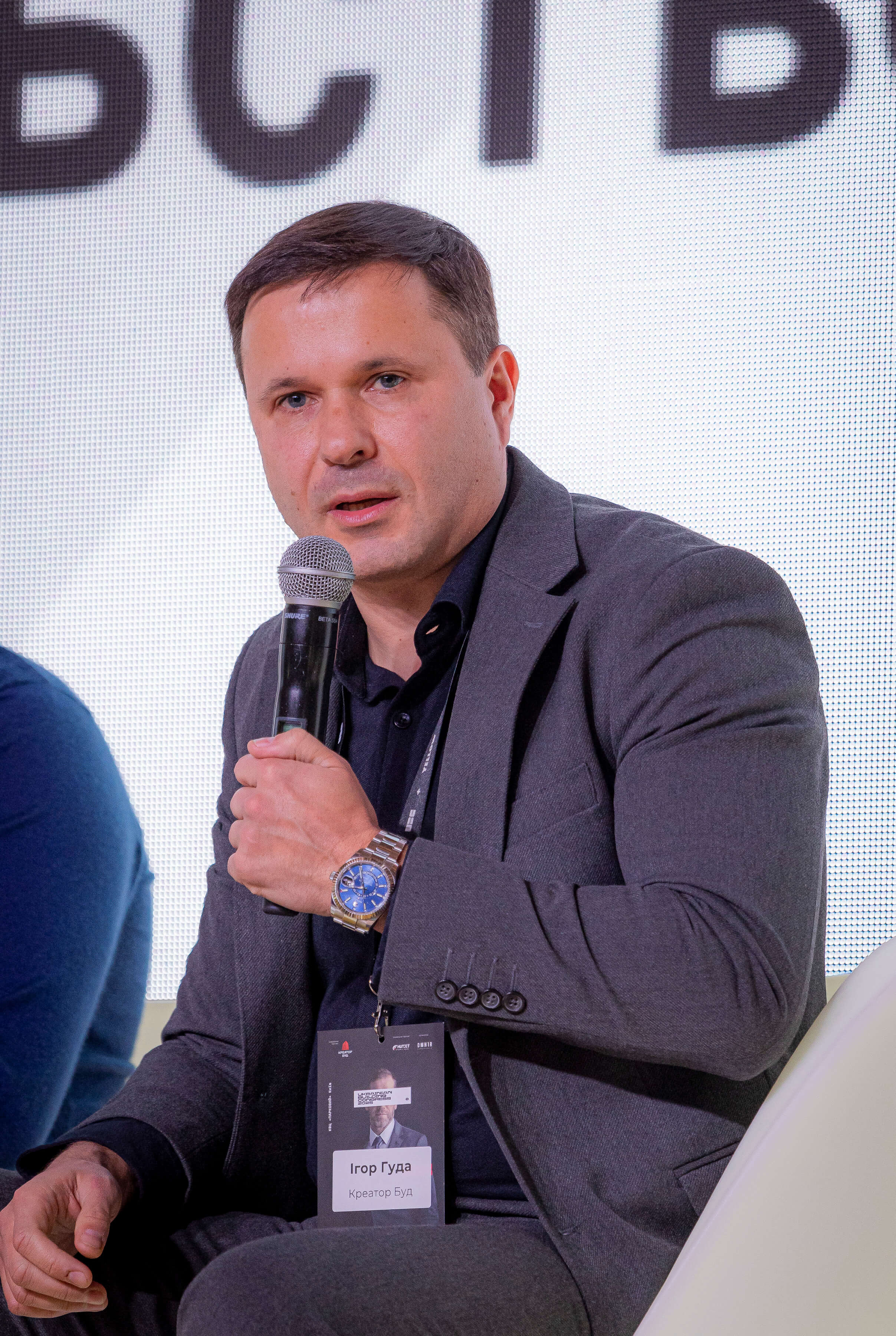
Igor Guda put an additional emphasis on the importance of energy independence and how his company deals with it:
"We have implemented a solar energy storage system in our Gravity Park complex. There is always light and heat there. And our experiments have shown that the cost of a kilowatt is minus 50% of the residential tariff. You must admit, it's great."
According to him, security, energy saving, and infrastructure are universal needs that unite residents of all regions.
Conclusion.
The discussion at the Construction Congress showed that development in Ukraine is undergoing a profound transformation. And these changes are for the better. The war, changing societal expectations and technological challenges are shaping a new market standard, where the developer is a responsible participant in the development of the city, a moderator of change and a provider of a new quality of life.


