The Ukrainian Association of Developers has become the general partner of LUN City 2026
On June 9, Kyiv hosted the large-scale LUN City 2026 conference, which brought together over 500 participants, including representatives of the government and cities, developers, architects, urban planners, civic initiatives, expert organizations, and the media. The Ukrainian Association of Developers served as the event’s general partner.
.jpg)
This year’s theme for LUN City focused on new demands for residential development as part of a livable city. The full-scale war has changed people’s expectations of housing: today, an apartment is no longer viewed merely as square footage. For residents, safety, energy efficiency, accessibility, quality of space, access to infrastructure, and the city’s ability to adapt to new challenges are becoming increasingly important.
The conference program covered four key areas: fundamental changes in approaches to new housing, accessibility, energy independence, and urban infrastructure. A separate topic focused on the strategic development of cities in the context of outdated urban planning regulations and complex approval procedures.
During a discussion on urban planning documentation, MP Olena Shulyak, Chair of the Verkhovna Rada Committee on the Organization of State Power, Local Self-Government, Regional Development, and Urban Planning, emphasized that the issue of outdated master plans directly affects every member of the community.
“Kyiv is still operating under a master plan that was first drafted in 1997 and approved in 2000. It is still in effect, but it is certainly no longer relevant. Without a vision for the comprehensive development of the area, everyone suffers—residents, the city, and businesses alike,” noted Olena Shulyak.
According to her, housing construction should be considered a national priority, as Ukraine needs new solutions to provide people with housing, develop communities, and attract investment.
“We all need to come together to ensure that the rules are clear, free from corruption, and designed in such a way that both businesses and residents benefit,” added Olena Shulyak.
Yevhen Favorov, Chairman of the Ukrainian Association of Developers, emphasized that urban planning issues represent one of the key barriers to the industry’s development. According to the results of an industry survey conducted by the Association, developers cite the instability of the permitting system, the difficulty of obtaining urban planning conditions and restrictions, as well as the urban planning preparation of land plots as among the main problems.
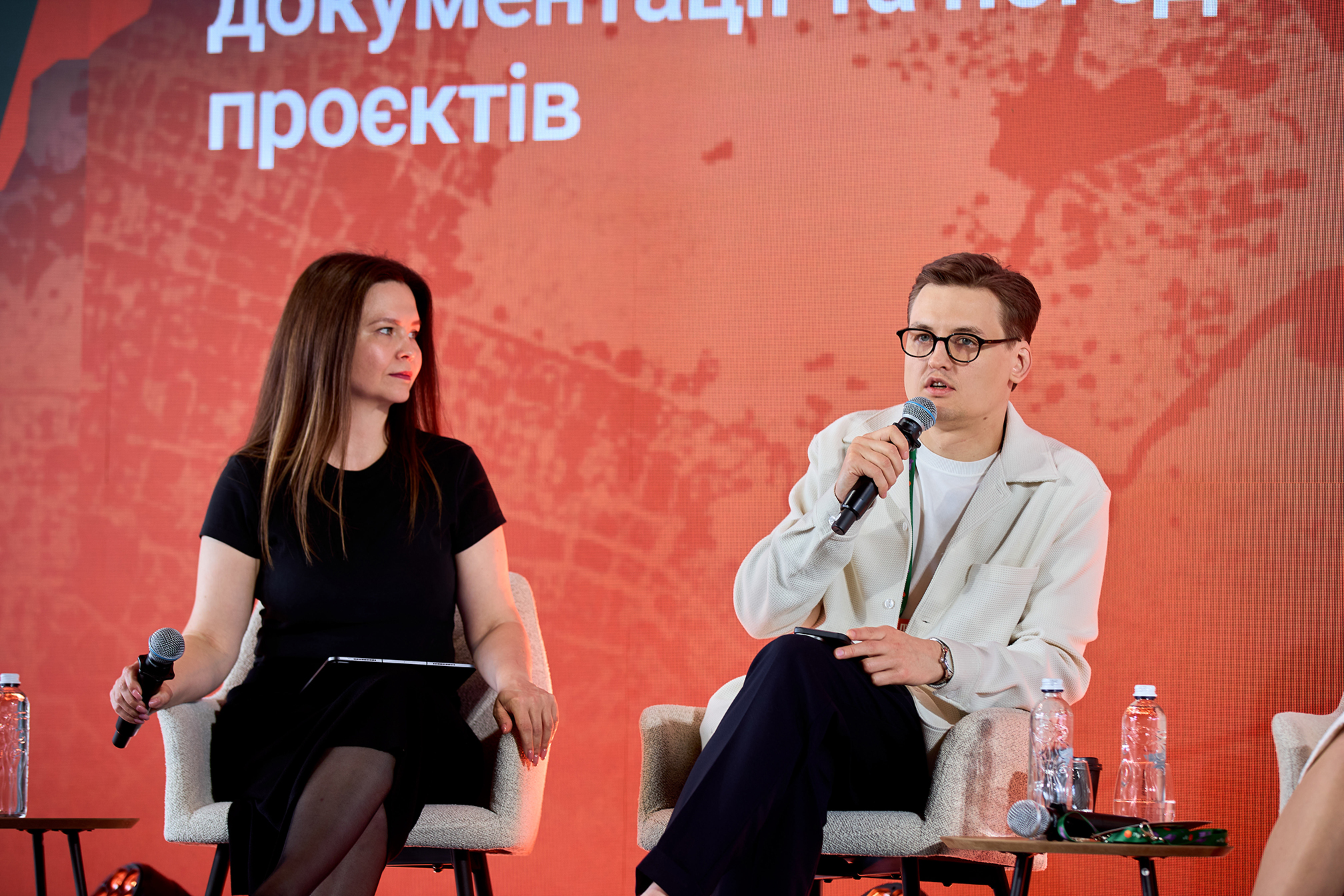
“The government is already taking steps to address the first two issues—the permitting system and urban planning conditions and restrictions. But we have yet to see solutions regarding the urban planning preparation of land plots and urban planning issues. And it is precisely this that is currently hindering the comprehensive development of large areas,” said Yevgeny Favorov.
He also emphasized that industrial and brownfield sites in cities can serve as a resource for new housing, social infrastructure, and a modern urban environment. However, this requires transparent and predictable mechanisms that will allow local authorities to make decisions more quickly, while taking the public interest into account.
“There needs to be a balanced solution that favors housing construction. If housing is a priority for the state, then regulations should help create new housing, rather than preserving areas that have remained unused for years,” emphasized Yevgeny Favorov.
UDP Commercial Director Yevgen Bokiy also spoke about the challenges of working with large urban areas. Using industrial zones as an example, he explained that businesses often face a choice: wait years for the master plan to be updated, restore outdated industrial use (with all the consequences for the environment and urban comfort), or seek compromise development formats that are not always the best for the city.
.jpg)
“Business doesn’t understand the word ‘wait’—it has to keep moving forward. If large, neglected industrial sites can become self-sufficient, complete with kindergartens, schools, and the necessary infrastructure, the government must find a mechanism that will allow them to be transformed into fully-fledged residential and community developments. In the case of industrial parks, a solution was found. Perhaps one can be found here as well,” noted Yevhen Bokiy.
Roman Davymuka, CEO of Avalon, pointed out that the problem with urban planning is not limited to a lack of documentation. In many cities, there is a conflict between different types of documentation, which creates uncertainty for both businesses and local authorities.
“Every new document represents a new story and a new path to be explored. A key step must be to standardize and harmonize existing documentation so that cities can plan their development not under the pressure of criminal cases, but based on a vision, statistics, and clear rules,” said Roman Davymuka.
Representatives of the real estate development community also participated in the session on new housing, including Rostislav Melnik, founder of RIEL, and Igor Raikov, founder of the Kyiv School of Development and a military officer. The discussion focused on how approaches to housing construction should evolve in light of the protracted war, security risks, new buyer expectations, and the needs of cities.
A separate session of the conference was dedicated to accessibility. Natalia Kozlovska, Deputy Minister of Community and Territorial Development of Ukraine, emphasized that accessibility cannot be reduced solely to ramps, wide doors, or elevators. It refers to a much broader system—physical, informational, digital, educational, economic, and social accessibility.
“Accessibility isn’t just about ramps, wide elevators, or wide doors. It’s about making urban spaces accessible and convenient for all citizens. And when we talk about physical accessibility, it opens the door to all the other opportunities that need to be implemented at the legislative level, at the community level, and in practice,” noted Natalia Kozlovska.
According to her, only about 20% of facilities in Ukraine can currently be considered accessible, which means there is a great deal of work ahead not only for the government and local authorities, but also for the business community.
“I urge businesses to view accessibility not as an expense, but as an investment—in their own business, in jobs, in the quality of service, and in their reputation as a responsible entity that prioritizes the accessibility of its facilities,” emphasized Natalia Kozlovska.
In her speech, Anna Iskierdo, co-founder and CEO of AIMM, emphasized that accessibility can be virtually cost-free if it is incorporated during the design phase rather than corrected after implementation.
“The main message is that accessibility doesn’t have to cost anything if you plan for it early on. Architects and developers are responsible not only for physical accessibility, but also for safety, wayfinding, spatial clarity, and equal access to buildings,” said Anna Iskierdo.
Another key focus was the energy efficiency of housing. Participants in the discussion noted that following the blackouts of 2022–2023 and difficult winters, buyers began to assess the quality of a home differently. The availability of backup power, functioning elevators, pumps, water supply, heating, and critical infrastructure have become just as important as having a school, park, or store nearby.
Dmytro Struk, Director of Development at "Creator-Bud," noted that last winter demonstrated just how critical it is for a building to maintain basic functions during power outages.
“Everyone has experienced how difficult life can be when the power goes out, the elevators aren’t working, there are water issues, and the apartment is cold. That’s why, as a developer, we began implementing an energy-efficient residential complex model—complete with solar panels, batteries, and backup power solutions,” said Dmytro Struk.
Anna Popruga, a representative of KAN Development, also joined the discussion on energy sustainability. Participants in the session noted that energy efficiency and backup power are gradually becoming the new standard for housing quality, rather than an optional feature for individual projects.
The final session of the conference focused on cities as places to live and new approaches to urban development. Ivan Molchanov, co-founder of the capital’s strategic development platform, emphasized that Ukrainian cities must shift from reactive solutions to strategic thinking.
“Today, we often react to immediate challenges—arrivals, destruction, and crisis situations. But we need to talk more about the future and about solutions for at least the next five years. It’s important to learn to listen to one another: so that the city hears Kyiv residents, developers hear activists, and urban planners hear architects,” noted Ivan Molchanov.
LUN City 2026 demonstrated that the real estate development sector, the government, local communities, and the expert community share a common agenda. Ukraine needs new housing, but it must not only provide square footage but also create a high-quality urban environment: one that is safe, accessible, energy-efficient, well-planned, and integrated into the city’s development.
For the Ukrainian Association of Developers, participating in the event as a general partner was a continuation of its ongoing efforts to foster an open dialogue between the business community, the government, cities, and society. It is precisely this dialogue that should form the basis for new, transparent rules of the game in real estate development—rules that will allow the industry to grow, cities to thrive, and Ukrainians to enjoy quality housing and a comfortable living environment.


