Polish forum and new approaches to residential project safety
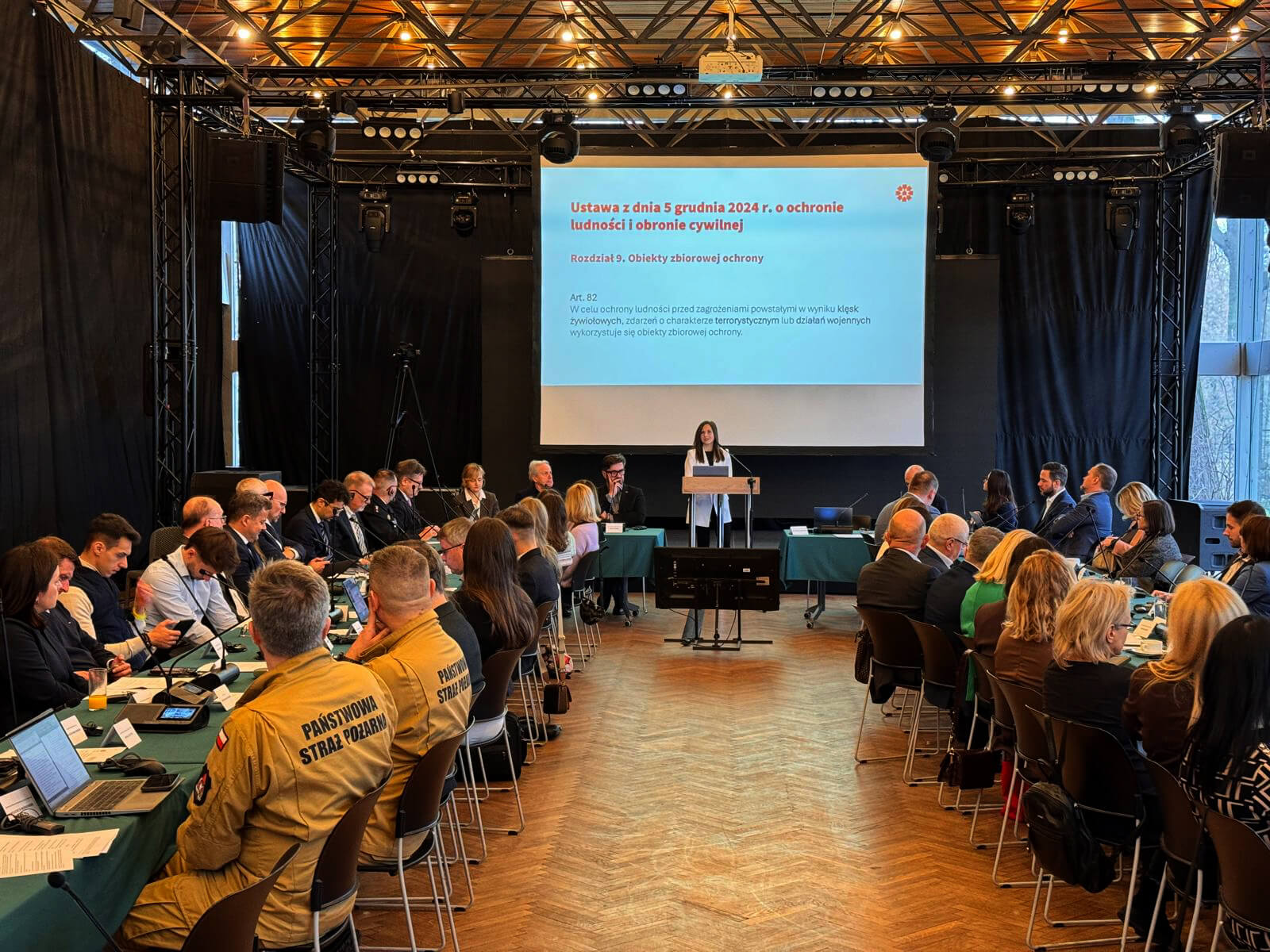
On December 2, a forum was held in Poland with the participation of Polish developers, relevant ministries, and local government representatives, dedicated to new security challenges in Europe. The agenda included the issue of setting up temporary shelters.
Yevgen Favorov, head of the Ukrainian Association of Developers, spoke at the forum and shared Ukraine's experience, emphasizing the practical aspects and key components of implementing such solutions.

"Modern warfare conditions, where a missile can reach its target in less than three minutes, dictate certain requirements for shelters. The most important of these is the speed with which you can get to the shelter; everything else is secondary," Yevgen shared his experience.
When it comes to shelters, many factors must be taken into account simultaneously. When discussing the risks of damage to residential buildings, both the type of property and the type of weapon must be considered. For example, the damage caused by a shahid attack is very different from the damage caused by a rocket strike. And old residential buildings differ enormously from new ones in terms of stability.
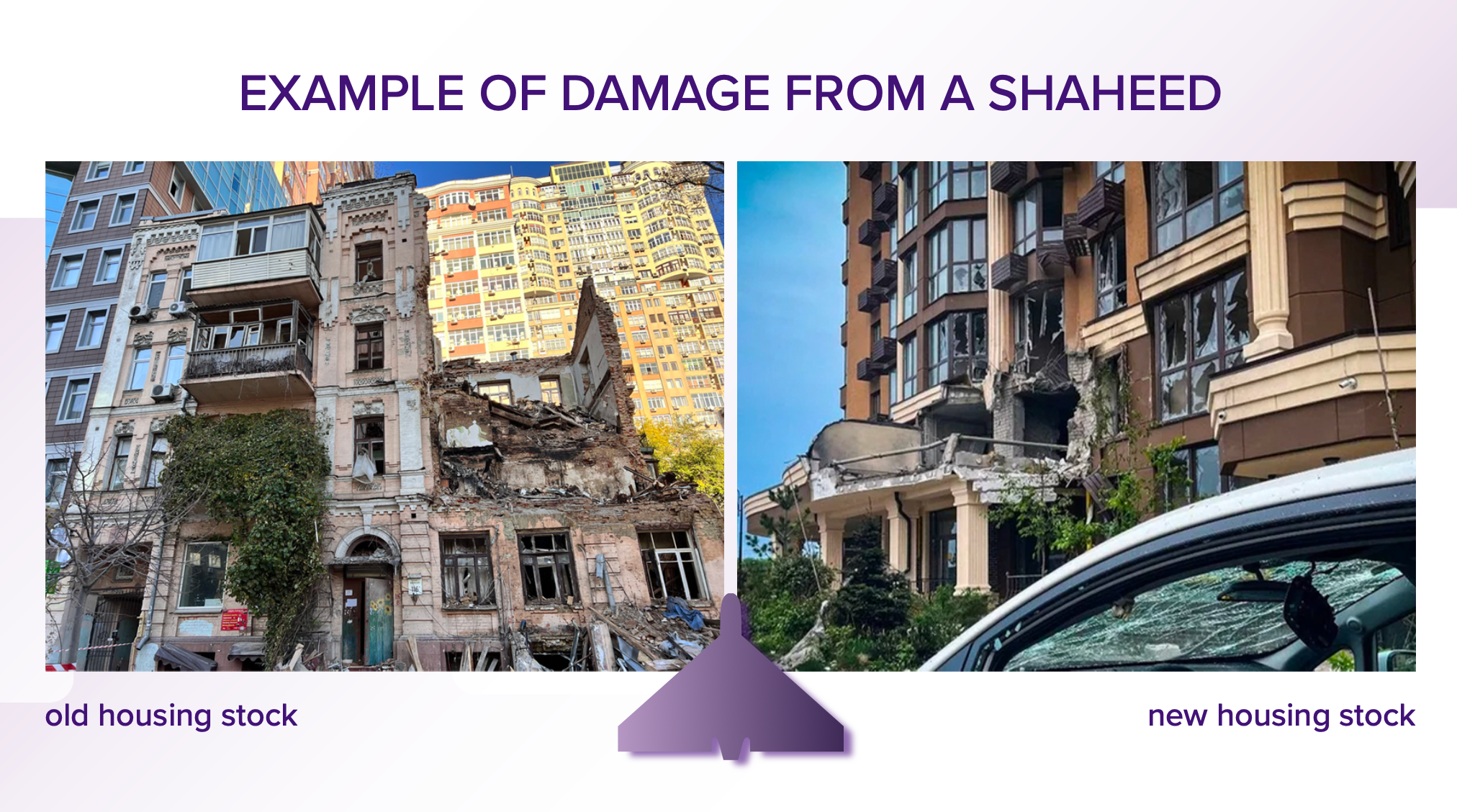
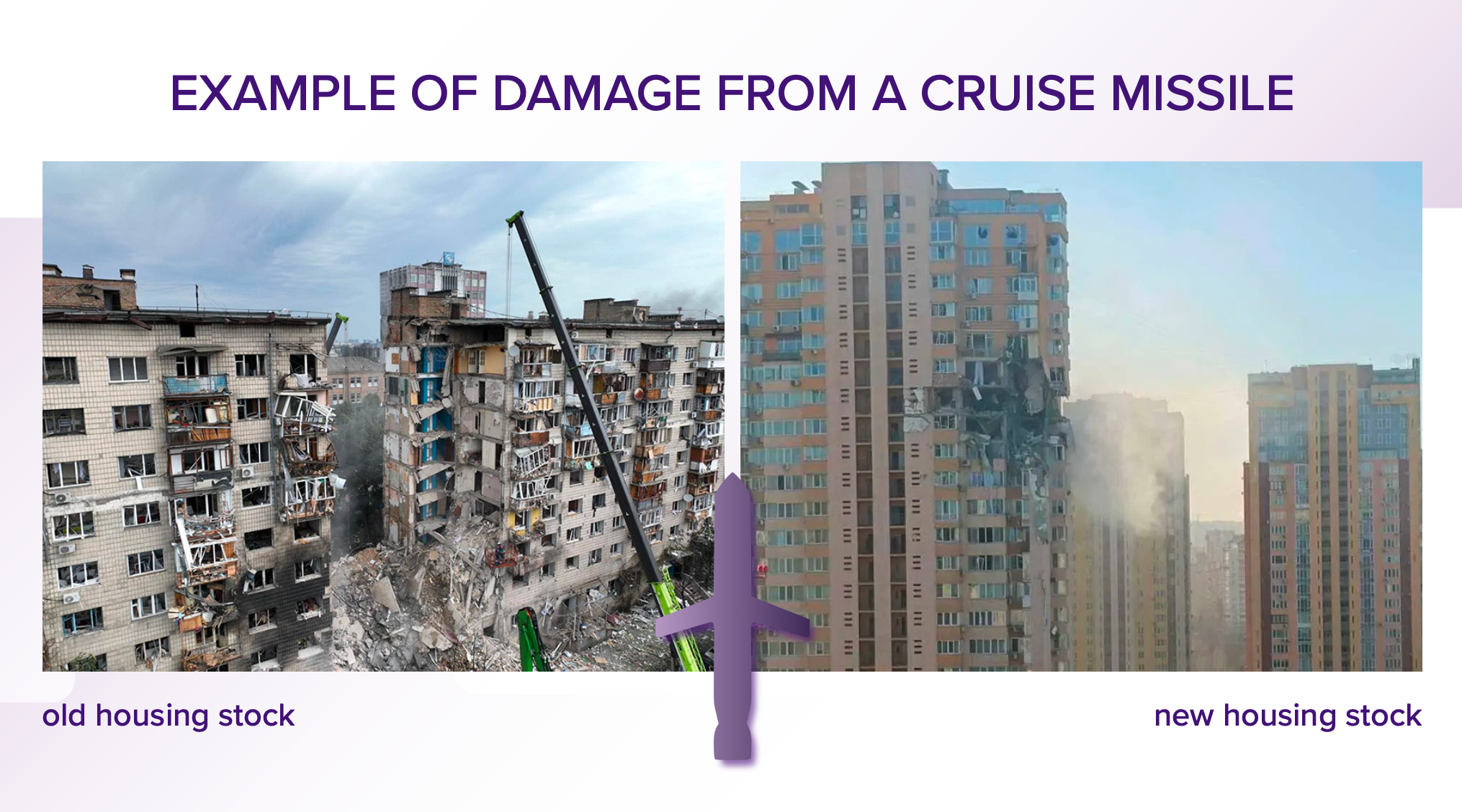
"From our experience in Ukraine during the full-scale war, we have seen time and again that modern monolithic frame buildings often retain their load-bearing capacity after an explosion, even when the facades are significantly damaged. Strategically, the best and most important solution for cities is to renovate outdated housing stock, because that is where the greatest vulnerability, worn-out networks, and worst safety conditions are found.
In new projects, underground/sunken parking lots already serve as shelters," commented Yevgen.
In addition, since we were talking about temporary shelters rather than permanent shelters as such, the following aspects are important here:
- inventory (inventory) of premises that can be used as temporary shelters if necessary;
- cooperation and clear division of responsibilities between the state, local authorities, and private individuals in the development of such places;
- dual use of such places as a guarantee of maintaining them in proper condition and ensuring their sufficient number, and therefore their accessibility (a key requirement for such places).
According to developers from Poland, the biggest pain point for them right now is the excessive bureaucracy and the huge number of conditions and regulations that must be met when setting up temporary storage facilities. "The requirements are so high that they are almost impossible to meet," said one of the participants.
In practice, we see that standards and requirements are indeed necessary for permanent storage facilities, but they need to be more flexible for temporary storage facilities. This is because a large number of such storage facilities are needed in long-established buildings such as schools, hospitals, energy facilities, etc. If the requirements are too difficult to meet, this will slow down or even prevent their rapid construction and use.
The difficult experience gained during the war is becoming increasingly important for Europe.
Ukrainian experience has shown that frame-monolithic buildings are much more resistant to various types of attacks. Panel buildings are the most vulnerable, with thin walls and weak structures being their main problems. Such buildings can collapse in an avalanche-like manner. Basements or technical spaces in panel buildings were also not designed as shelters. If even a neighboring building is hit, the basement or foundation may collapse, making such "shelters" extremely risky.
According to Ukrainian engineers and architects, new buildings offer more chances of rescue for a larger number of people. Modern high-rise buildings are the most durable. They have concrete "rigidity cores" — elevator and stairwells. In taller buildings, these columns are thicker, which means greater stability.
International studies confirm the same conclusions: panel structures are the least resistant to explosions, while monolithic and brick buildings are significantly stronger.
The experience of Northern Europe: Finland and Switzerland
Finland and Switzerland have spent decades building civil protection systems that are now considered among the best in the world. In Finland, almost every new building has its own shelter — as required by law. Underground parking lots, gyms, and technical rooms are designed from the outset to serve as safe spaces for residents in case of danger. As of 2022, there were more than 50,000 such structures in the country, designed to accommodate nearly 5 million people. That is almost the entire population of the country.
Switzerland has an even larger system. The principle there is that there must be shelter for every resident. The country has about 9 million places in residential buildings, schools, and municipal institutions. The state regularly invests in improving these facilities so that they are always ready for use.
The experience of these countries shows that an effective shelter system requires a long-term and consistent policy. When shelters are incorporated into housing design standards rather than being built "somewhere later," they become a safety tool.
.jpg)


