Cities are looking for money, and the government is looking for opportunities to build housing. The business community insists: the solution is right under our feet
Cities are looking for funding for development, while state authorities are seeking opportunities to build more housing. Developers are proposing a solution that could help address both challenges and bring in millions of dollars to state and municipal budgets. The Annual Housing Conference 2026 featured discussions about a resource that is literally right under our feet and the possibilities for its use.
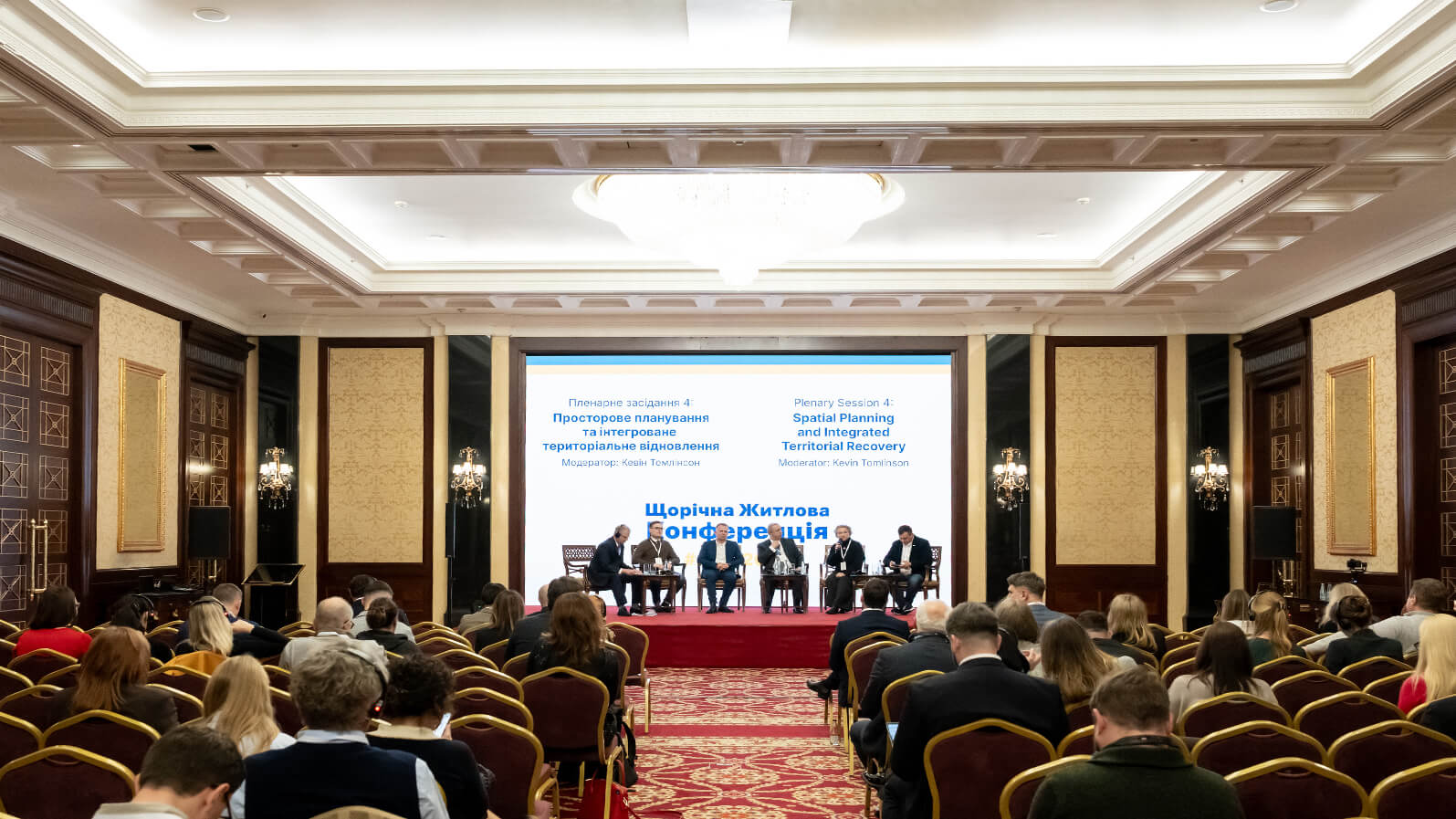
During the panel discussion titled “Spatial Planning and Integrated Territorial Recovery,” representatives from parliament, local communities, the real estate development sector, and the World Bank Group discussed how to ensure the development of housing construction amid limited funding, complex urban planning regulations, and large-scale reconstruction needs.
Yevhen Favorov focused on three issues raised by the participants in the discussion: a lack of funding for urban planning documentation, the limited effectiveness of regulatory mechanisms, and communities’ need for private investment.
“I have an answer to all three of these problems. There is only one answer—development. I am confident that each of these problems can be solved through cooperation with the business community,” the Association’s chairman emphasized.
Urban Planning: Legislation and Funding
People’s Deputy Hanna Bondar highlighted the need for further development of urban planning legislation following the adoption of the law “On the Basic Principles of Housing Policy.” Specifically, this concerns mechanisms for setting aside land, taking into account various housing formats in urban planning documentation, and resolving land issues related to apartment buildings.
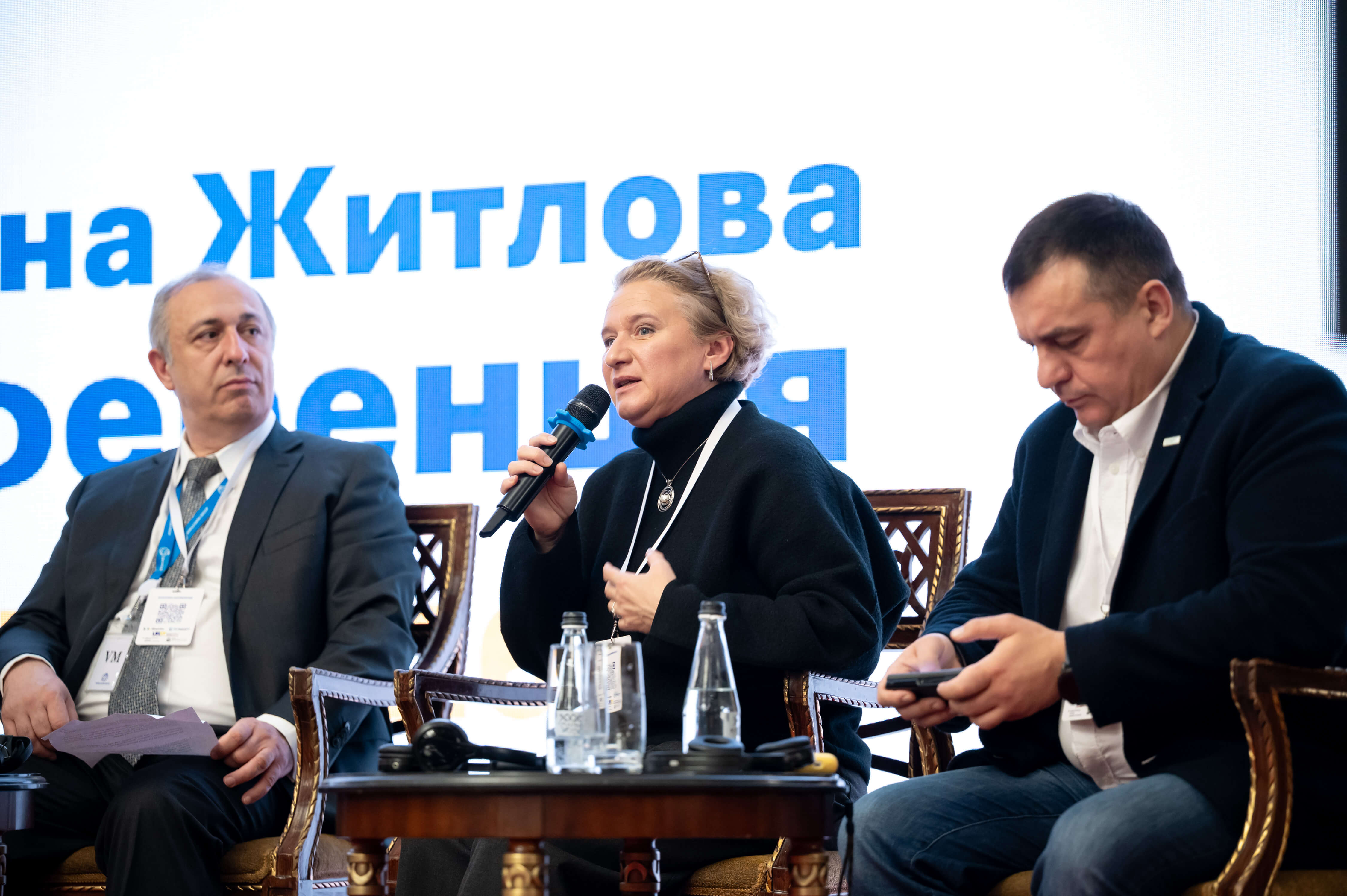
A separate challenge remains the complexity of preparing comprehensive spatial development plans for communities.
“We need to look for a way out of this crisis we’ve found ourselves in,” said Hanna Bondar, emphasizing the need to develop and approve urban planning documentation.
Ivan Slobodyanik, executive director of the “All-Ukrainian Association of Communities,” also highlighted financial constraints. He estimates that developing comprehensive spatial development plans across Ukraine could cost approximately $300 million. At the same time, communities are facing budget constraints, a reduction in donor support, and a shortage of specialists.
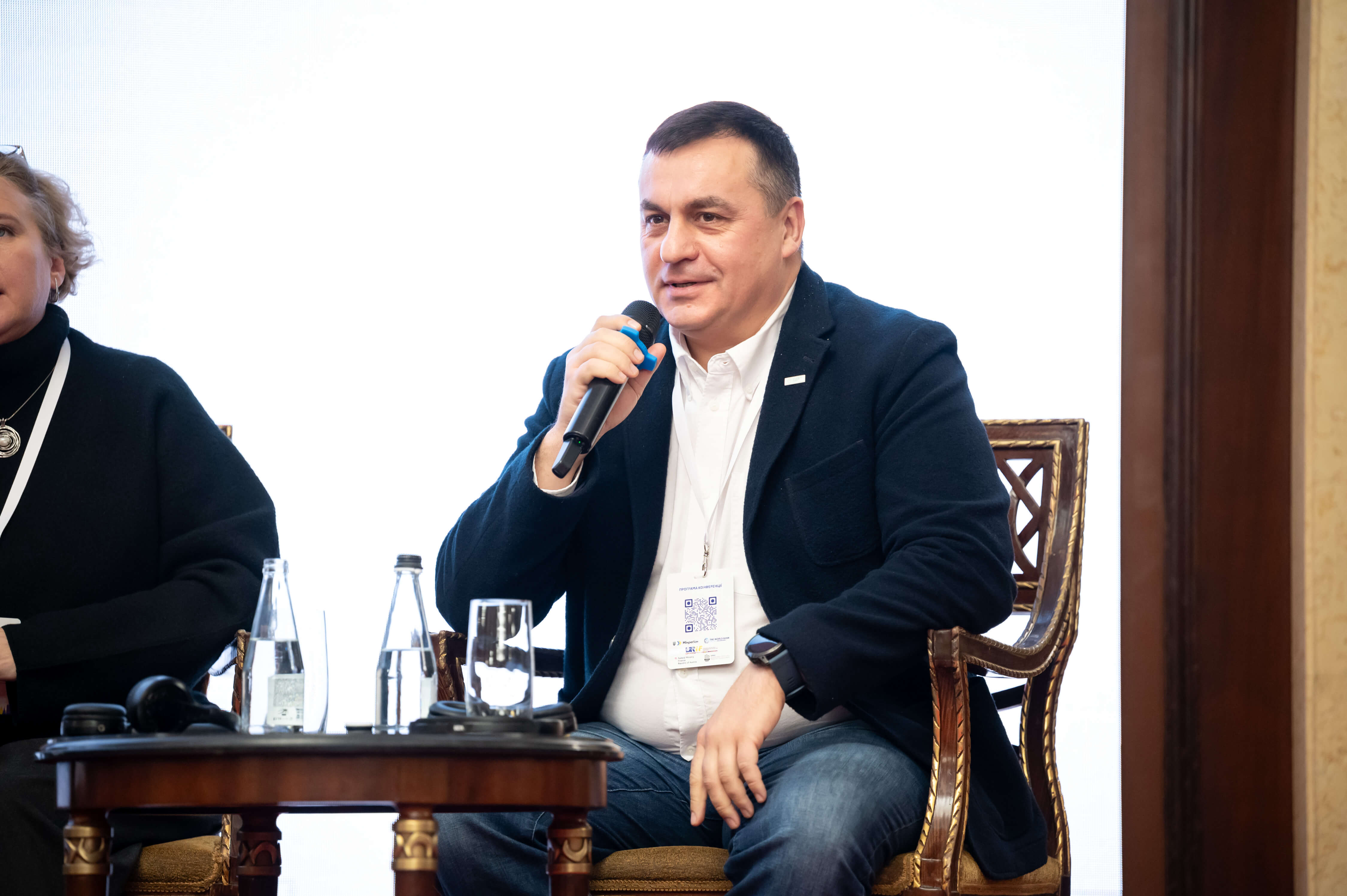
In response to this issue, Yevgeny Favorov highlighted legislative changes that allow developers to finance the preparation of urban planning documentation.
“The legislation has recently changed; a new law has gone into effect, and now we, as developers, have this opportunity. This is a very good decision.”
According to the Association’s president, this mechanism creates an opportunity for communities and businesses to collaborate in preparing areas for future development.

1,700 hectares for the transformation of Kyiv
Yevgeny Favorov sees the greatest potential for attracting investment in the revitalization of post-industrial areas—former factories, industrial zones, and large, underutilized plots within city limits.
While drafting the new Master Plan for Kyiv in 2015, city officials estimated the area of industrial sites that might require redevelopment at approximately 1,700 hectares. Although the document was not approved, this estimate demonstrates the scale of the capital’s potential for implementing hundreds of comprehensive development projects.
To assess the potential economic impact of developing such areas, the Ukrainian Association of Developers prepared a separate analysis based on the practical experience of its member companies. The analysis uses a mixed-use project on a former industrial site covering 10 hectares as an example.
Yevgen Favorov also pointed out that former industrial sites often already have utility networks in place. These are large plots ranging from 10 to 50 hectares in size, which are currently being used inefficiently or remain unused.
In such areas, it is possible to develop fully-fledged urban neighborhoods with housing, public and social facilities, and the necessary infrastructure.
The Lviv Experience: Rethinking Entire Areas
During the discussion, Yuriy Telipsky, director of the Lviv Municipal Enterprise “Lviv Intercity Bureau of Technical Inventory,” spoke about Lviv’s experience, noting that even before the full-scale invasion, the city had adopted an approach focused on compact development and the transformation of former industrial areas.

In Lviv, such projects are seen as an opportunity to combine housing with workplaces, social infrastructure, public spaces, and an accessible environment.
“For us, as a city, it’s important to rethink areas, not just projects,” emphasized the representative from Lviv.
As an example, he cited the development of the UNBROKEN urban ecosystem and the surrounding neighborhood, which combines social, temporary, specialized, and private housing, as well as infrastructure and community amenities.
According to him, the comprehensive development of the region is already helping to create new businesses and attract private investment.
Why Flexible Regulation Is Needed
One of the issues under discussion was the practice of granting exemptions from general urban planning regulations.
Hanna Bondar cautioned that a large number of exceptions could undermine the logic of spatial planning and create the risk of haphazard development.
Yevgeny Favorov agreed with the need for systematic regulation, but stressed that, in the absence of viable alternatives, completely eliminating exceptions could hinder the development of new projects.
“If the current model isn’t working, then doing away with exceptions will have negative consequences. We’ll simply bring the entire market to a standstill. We saw this happen in early 2025, when the restriction on changing a property’s designated use went into effect.”
According to Favorov, post-industrial areas require a special approach, as their previous functional purpose often no longer meets the city’s current needs.
He cited the examples of Germany and Poland, where legislation provides for a fast-track process for amending urban planning documents—in particular, through simplified procedures—to transform former industrial sites and implement new investment projects.
"I am confident that today, the greatest potential lies in two areas. The first is post-industrial areas. The second is efficient, streamlined procedures that will make it possible to unlock these areas."
At the same time, the Association’s president emphasized that regulatory flexibility should be applied within the framework of principles that ensure the sustainable development of cities.
IFC: Reconstruction Requires Private Capital and High-Quality Projects
Eduard Yakubov, a representative of the International Finance Corporation (IFC), highlighted the scale of Ukraine’s housing sector reconstruction needs. According to the RDNA-5 estimate he cited, these needs amount to approximately $90 billion.
“Government funding and donor support will not be enough. Therefore, the private sector must step in to mobilize investments and resources to meet these needs.”
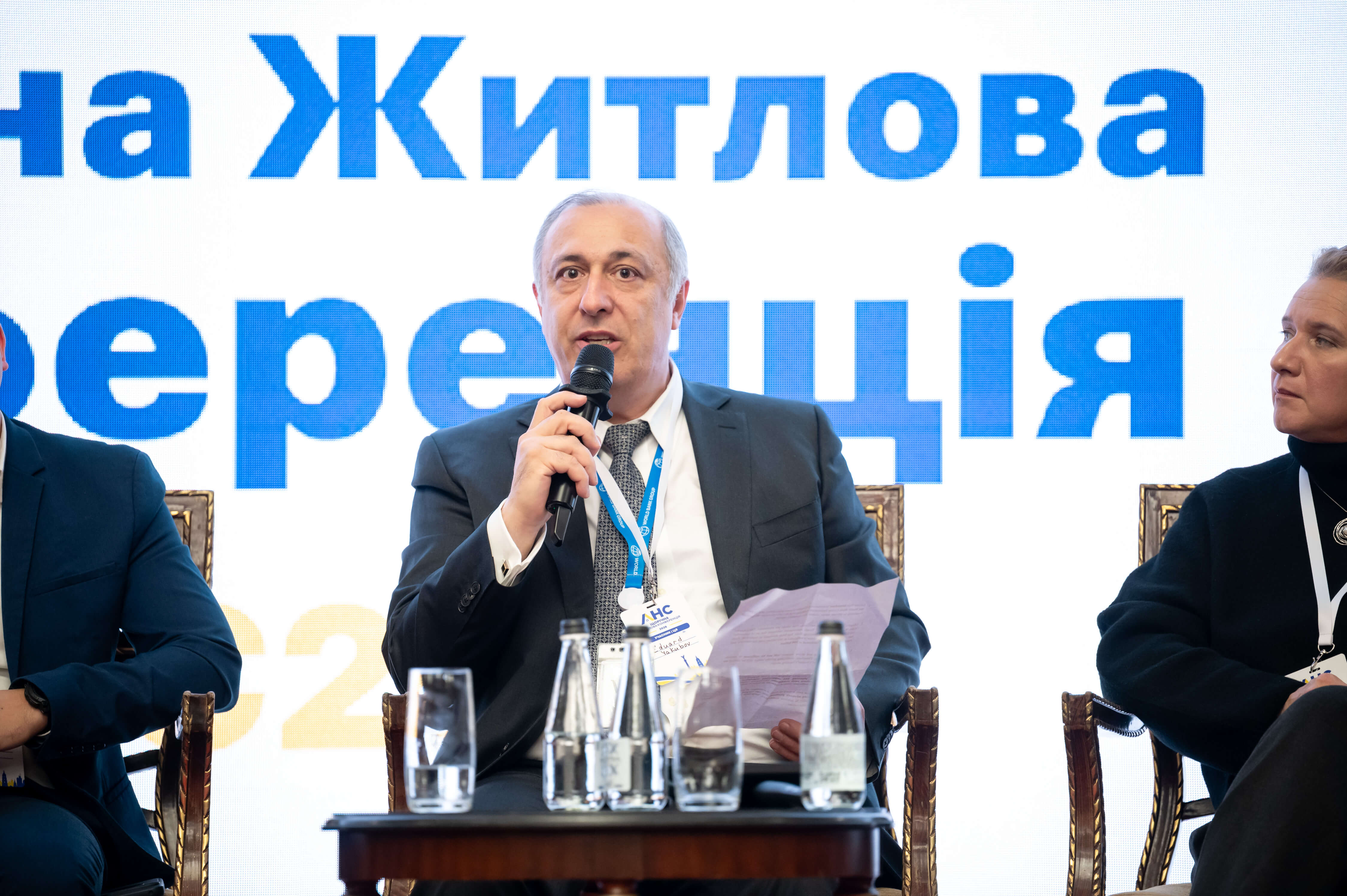
At the same time, the IFC representative emphasized the need to create a fully functional living environment that includes schools, transportation, services, and other elements of urban infrastructure.
During the panel discussion, the IFC’s approach to evaluating developers and housing projects under the PILLAR program was also presented. It covers financial and corporate governance, project implementation capacity, housing affordability, safety, energy efficiency, and social sustainability.
These tools are designed to increase the transparency of real estate development companies and help financial institutions and investors assess their financing options.
How to Strike a Balance Between Business and Community Interests
During the Q&A session, participants raised the issue of a potential conflict of interest in the event that developers finance urban planning documentation.
In particular, the discussion focused on how to strike a balance between developers' commercial interests and the city's needs for public spaces, industrial facilities, and jobs.
In his response, Yevgeny Favorov emphasized the distinction between the roles of business and local government.
“We are not the client for this urban planning documentation. We are the payer. The client is the local administration, the local council—that is, the community. And its job is to ensure that everything is taken into account in accordance with the State Building Standards (DBN) and the requirements of the law.”
According to him, businesses are interested in a high-quality urban environment, since today's buyers have high expectations for residential complexes.
Favorov cited transportation and social infrastructure, the reliability of utility systems, and the buildings' ability to operate autonomously as key features of the new housing.
At the same time, he emphasized that it is the city and the state that should determine the development requirements that developers must take into account in their projects, considering the appropriateness and proportionality of such requirements.
Cooperation as a Prerequisite for Urban Development
In summarizing his position, Yevgeny Favorov emphasized that the implementation of large-scale development projects requires coordinated efforts among local communities, government authorities, and the business sector.
“I am convinced that cooperation must, of course, be the key. And that means cooperation between communities, government, and developers. But the right conditions must be in place for this cooperation.”
According to the head of the Ukrainian Association of Developers, effective urban planning legislation, the ability for the private sector to finance planning documentation, and mechanisms for the transformation of post-industrial areas can create the conditions for new investments in residential construction.
The potential of such areas is measured not only by the future square meters of housing but also by the opportunity for comprehensive urban renewal, infrastructure development, and the creation of new economic opportunities for communities.


